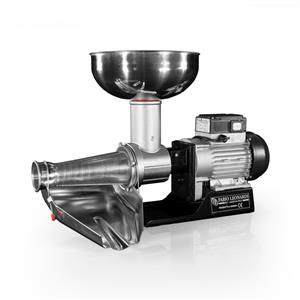
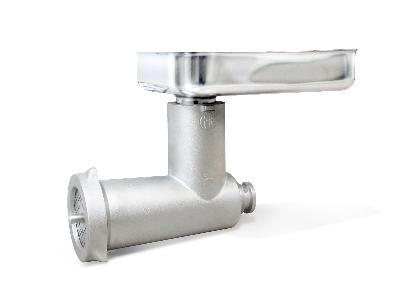
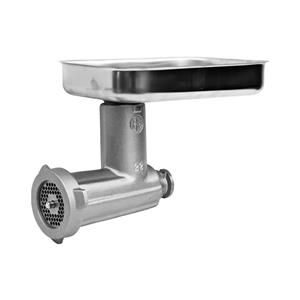
Made in Italy by Fabio Leonardi, this electric tomato milling machine crushes and purees pounds of tomatoes in minutes. Its extra-large stainless steel feed bowl supports medium to large batches of tomato sauce. With an approximate processing capacity of 660 - 800 lbs. per hour, it is well suited for restaurants, small businesses, and professional cooks. The machine disassembles quickly for easy cleanup.
The tomato press has a certified cast-iron body, propeller, and ring with Niploy treatment; the materials and treatment are food-grade and certified. Its funnel, filter, and tomato chute are made of stainless steel. A stainless steel splash guard can be installed on the chute upon request. A two-year limited warranty is included; terms and conditions apply.
Quick Facts:
Extra-large stainless steel feed bowl
Electric milling machine that does the work for you
Crushes and purées pounds of tomatoes in minutes
Great for restaurants, small businesses, and professional cooks
Manufactured in Italy by Fabio Leonardi
Specifications
Horsepower
1 HP - 750 Watts
Screen
18/10 Stainless Steel
Screw Feeder
Double-Threaded
Neck
Heavy Cast Iron Treated with Special Resins - 3" Diameter
Feed Bowl
Extra-Large Stainless Steel - 10 1/2" Diameter x 4" Depth
Main Gear
Permanently Lubricated Spheroidal Cast Iron
Production
800 pounds per hour
Output Revolutions
120 per minute
Motor
Asynchronous with Condenser
Drive Gear
Steel
Motor Type
Asynchronous induction motor
Available Voltages
110/220/230/240 V, 50 or 60 Hz
Pole Versions
2-pole or 4-pole
Output Speed
110 rpm (2-pole version); 55 rpm (4-pole version)
Lubrication
Permanent grease lubrication
What does this mean for you?
This medium-heavy-duty tomato milling machine is suitable for home use, canning, small businesses, and more. It is designed to be the first and last tomato milling machine you buy. At 36 lbs., it is built with substantial materials.
Machine Operation
Fabio Leonardi electric tomato milling machines have specific instructions and tips for use. Each unit comes with a paper manual detailing assembly and cleaning instructions; the manual is also linked at the bottom of this description. In addition, Fabio Leonardi provides detailed preparation and processing tips for tomato milling:
To begin, remove the leaves and stems from the tomatoes. Then place a handful of whole, uncut tomatoes in the top SP hopper (bowl). Before turning on the unit, coat the spiral with olive oil. Place one bowl beneath the screen chute to catch seeds and peels, then place a second bowl under the tip of the screen to collect the processed food.
Move the switch to position “I” to turn on the machine. Guide the tomatoes through the hopper using the supplied pusher. Maintain a healthy level of tomatoes in the hopper, and do not run the machine empty. If desired, run the processed tomatoes through the machine a second time for fuller extraction of the tomato flesh. The machine separates the tomato flesh and juice from the skin and seeds. You can preserve the resulting product for later use or cook it to a thicker consistency to make tomato sauce.
Unique Fabio Leonardi Feature: Gasketless operation - most tomato milling machines use a gasket between the screen and the body of the tomato processing head. Gaskets can become dry or cracked, harbor bacteria, and need to be replaced repeatedly over time. Fabio Leonardi eliminated the gasket and instead designed the chute to capture juice that flows through the threads of the screen attachment. It is one of those seemingly logical ideas that comes with over 100 years of tomato milling experience: Why prevent the juice from flowing when you can simply capture it?
Included with Tomato Milling Machine
MR9 Motor
SP5 Tomato Milling Attachment
Funnel
Pestle
Trough
Screen
Cleaning and Maintenance
Do not run the machine empty. After use, wash all six easy-to-disassemble parts with water and mild detergent, then dry them thoroughly. Coat the metal pieces with olive oil before storage. The spiral is designed to scrape against the inside of the stainless steel screen, trapping the tomato against the screen in an ever-tightening spiral. Because the spiral is cast, some imperfections will wear off as metal shavings during the first run. Use stale bread with olive oil or older tomatoes with olive oil for the first run, then discard the batch and clean the machine. Please read the product manual linked at the bottom of the page for more details.
Accessory Compatibility
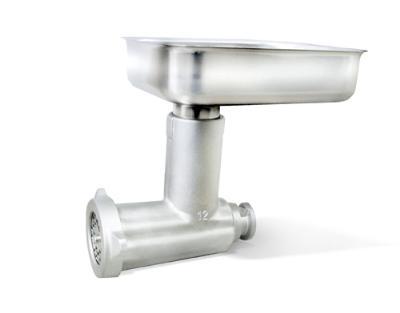
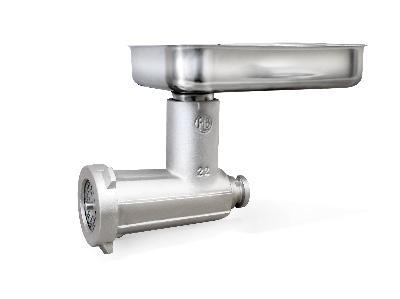
You can also use this machine as a meat grinder. Our suggested grinder attachment is the TC22, found in related items. This attachment should provide an appropriate meat-grinding capacity without overworking the motor. Also consider the sausage stuffers, found in related items, as a way to use pork, beef, deer, or any other type of meat you run through the grinder attachment.
About the Brand
Words from Our Pomodoro Residente Esperto di Premere (“Resident Tomato Press Expert”)
“Fabio Leonardi is the standard when it comes to electric commercial-grade tomato milling machines. The MR7 and MR9 are built to last and will provide the level of production a commercial application needs. The MR7 and MR9 come in either covered or uncovered versions. The uncovered version allows you to permanently mount the motor to your desired work surface.
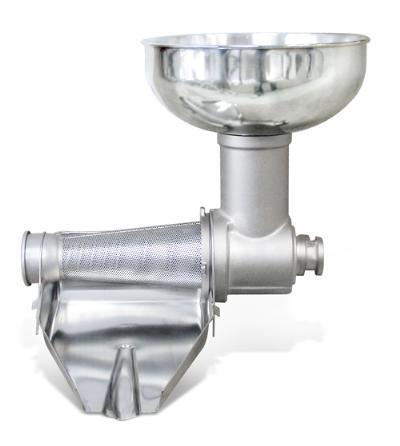
The MR7 and MR9 both feature a 1 HP motor and the same mounting point. These motor units are both compatible with the SP3 and SP5 tomato milling attachments. The difference between the attachments is their production capacity. The SP3 has a 2 1/4-inch neck opening; its screen is 5 1/2 inches long and 2 1/2 inches in diameter at the base. With this attachment, you will have to quarter your tomatoes so they fit properly down the neck of the tomato mill. The SP5 tomato milling attachment has a 2 3/4-inch neck, and its screen measures 6 3/4 inches long and 3 inches in diameter. This attachment has a very high production rate because of its overall size. Fabio Leonardi has included a splash guard with the SP5 due to the volume of tomatoes in the crusher.
The SP3 and SP5 are constructed from cast iron and stainless steel. During your first production run, you might notice metal shavings in your product. This is due to the screen shaping the tomato feed spiral so that it is a perfect fit. We recommend using a product you don’t mind throwing away for your first production run. After the first run, add olive oil before each production run to lubricate the spiral and screen.
One unique feature of the Fabio Leonardi tomato milling attachments is a spring placed at the base of the tomato feed spiral. It applies constant pressure to the spiral so it removes as much tomato flesh and juice as possible from the skin.
You will notice that there is no gasket between the screen and the neck attachment. This is because gaskets are generally made of a rubber-like material and can become contaminated over time. Rubber can also break down and fall apart. Fabio Leonardi designed the catch trough to sit beneath this portion of the tomato mill and catch leaking tomato juice. To attach and tighten the screen, turn it counterclockwise. To loosen it, turn it clockwise. As the tomato feed spiral spins, the friction between the spiral and screen continually tightens the screen.
Assembly of the Fabio Leonardi MR7 and MR9 is very simple. To properly align the driveshaft, leave the screen loosely attached. Use the screen to rotate the tomato feed spiral into the proper position. Align the flat portion of the attachment point on the tomato mill with the bar on the motor, and insert the tomato mill. Rotate the tomato mill upward and lock it into place.
The MR7 and MR9 are both compatible with the TC22 meat grinder attachment. This meat grinder has the same construction qualities as the SP3 and SP5.
The Fabio Leonardi MR7 and MR9 both have a momentary reverse switch. When you are working at this production level, a jam can occur. This function allows you to reverse the tomato feed spiral to clear the jam.
The MR7 and MR9 are both great choices for commercial applications requiring a very high level of production. Fabio Leonardi tomato mills have been around for nearly 100 years and are crafted from the finest materials. These tomato mills are built to last and can be passed down to future generations. TomatoMilling.com is dedicated to providing our customers with high-quality tomato mills and canning accessories. We have an educated staff standing by seven days a week to assist you with whatever you need.”
Fabio Leonardi Manufacturer Info
Fabio Leonardi made the first tomato crusher in 1917. For more than 80 years, this practical, economical, safe, and durable utensil has been distributed throughout Italy and around the world. It can be used to make tomato sauce, as well as fruit and vegetable juices and purées. The models Leonardi produces today carry on this tradition while incorporating improvements developed over the years to make the machines more functional and durable. Fabio Leonardi also produces meat grinders for small and medium quantities, stuffing machines, kneading machines, and other accessories that can connect to its motors.
Factory Visit
As a premier distributor of Fabio Leonardi products in the USA, I felt it was important to visit the factory and meet the people who carry on the company’s tradition of quality. I did just that in February 2007. I saw the different generations whose work traced the company’s history. Their passion and commitment to quality were impressive. The factory was modest and probably looked much as it had for the previous half-century. It stood not far from the center of Bologna, Italy.
I personally consider Bologna to be the culinary capital of the world, with the influences of Tuscany and the rest of Italy coming together in one place. The region’s passion for food may be why this company’s products are renowned worldwide for their quality and longevity. Originally, the company focused on local growers in Tuscany, helping them bring their harvests to market and transform the region’s tomatoes into its now-famous culinary creations.
That passion for food grew into a passion for quality that Fabio Leonardi passed down through subsequent generations. It extends to every aspect of the manufacturing process. His grandson spoke about the ideal temperatures and cooling cycles for castings, the careful selection of each type of metal, and the close monitoring of the machining process. Although some of the details were difficult for me to follow, his commitment to manufacturing quality was clear. By the time he described the finish of each piece, I was thinking about the café terrace where we would soon sip Chianti and enjoy lunch overlooking the valley below Bologna. I left assured that the tradition of quality behind this brand remained strong under its current management.